Tara Judah finds monsters lurking just beneath the surface of ‘strong female characters’ in a trio of upcoming Visions of Europe films.

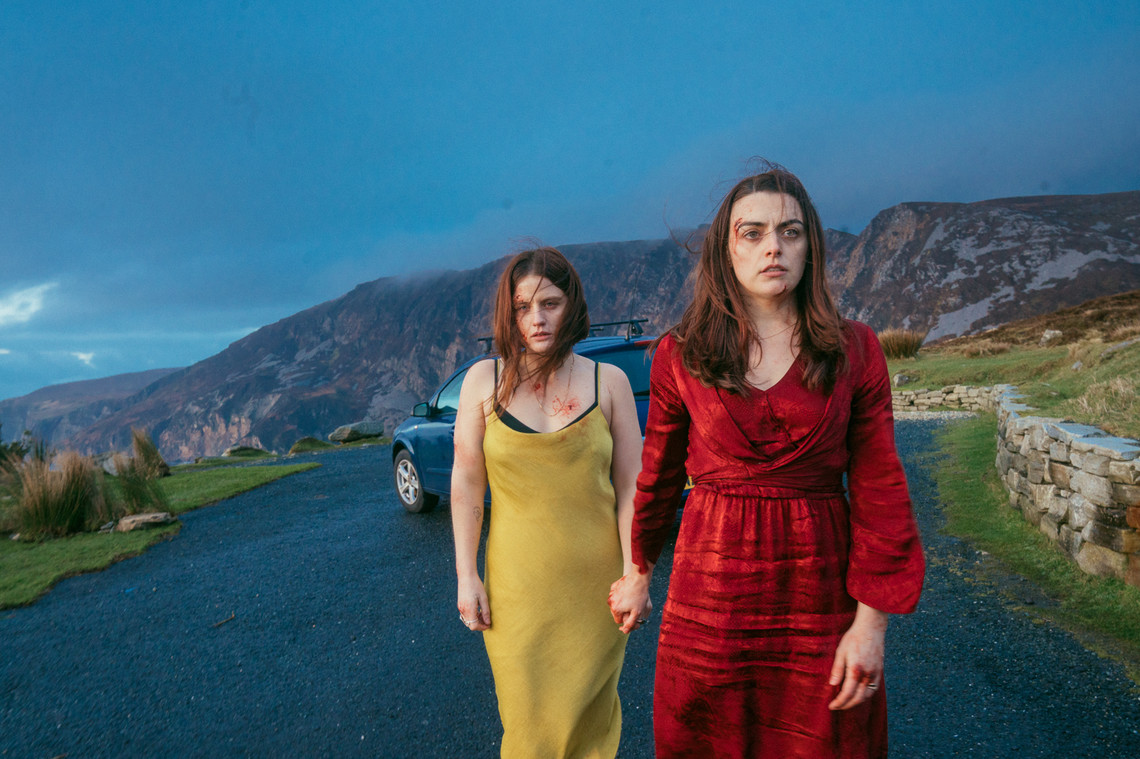
Dirty God is a striking film, and one I never really stop thinking about – its piercing blue and red colour wash signalling sirens as well as fire and ice, always just one blink away from my mind’s eye. Visual style aside, I was also captivated by its modern-day take on themes around the Monstrous-Feminine.
A term coined by Barbara Creed, applying the idea mostly to horror films (which saw women as one-dimensional victims), the Monstrous-Feminine manifests in women’s bodily functions and matriarchal character traits. From periods to overbearing mothers (Stephen King’s / Brian de Palma’s Carrie springs to mind), these women were to be feared, and killed.
But what if we tried to understand them instead? I’ve started seeing contemporary European arthouse dramas using Creed’s maxim to resituate women as complex protagonists, and it’s persuasive stuff. Stuck in the centre of their own narratives by their victimhood, they try to break free. As brilliant as it is terrifying, these women fight the male-dominated world around them, unleashing their victimhood - as a new kind of monster.
A kind, loving mother and daughter, Dirty God shows Jade’s (Vicky Knight) monstrousness through her desperation for patriarchal capitalist beauty. If she could just cross those restrictive borders in her life (she thinks) – mother, daughter, council estate, England, socio-economic class – then maybe she could paper over the cracks.
Where both the film and Jade won me over is in making her beauty obsession understandable not narcissistic. In recounting to a new friend what it was like when her mother brought her infant daughter to see her for the first time in hospital, Jade almost laughs as she utters the word, “Monster.” Incredulous, Jade’s quest is to understand being in her own skin, and flipping Creed’s victim status by not letting her ex or her scars hold power over her. She has to believe, as her mother (Katherine Kelly) tells the child, “It’s a nice monster, Rae.”
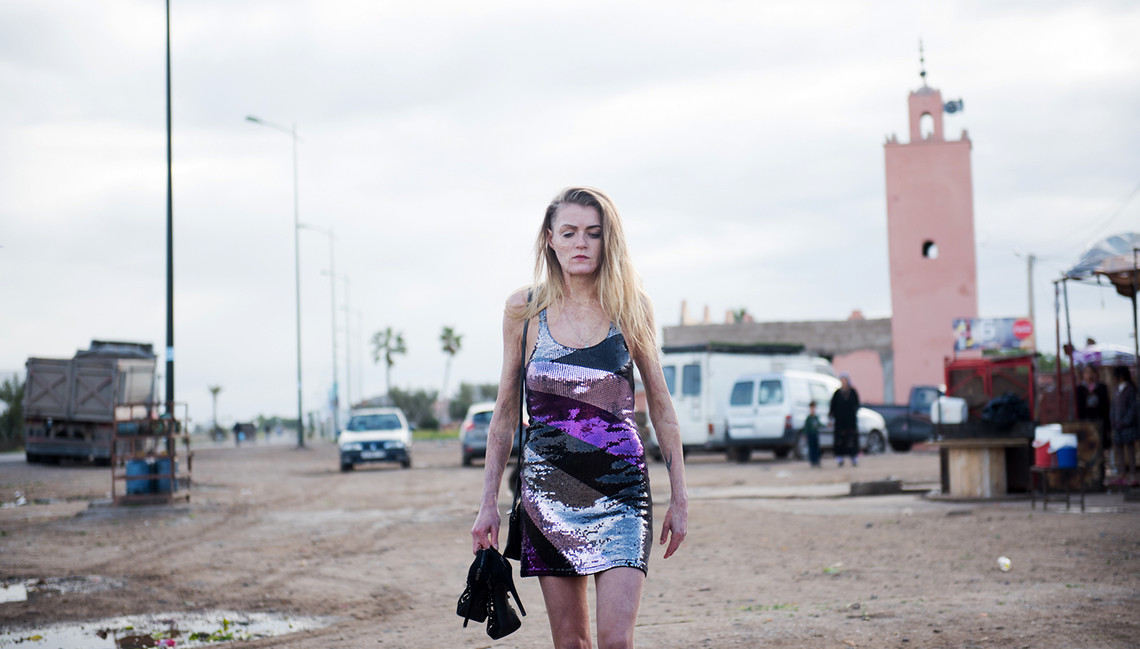
Nice monsters aren’t only found on council estates, they can present as high-powered white European matriarchs, too. In Queen of Hearts, Anne (Trine Dyrholm) represents the affluent, heteronormative, conservative values of a capitalist feminism with her beautiful family and modern design home. She is a success in her professional field, too - partner at her law firm, fighting a noble and righteous cause, defending children and youth survivors of rape and domestic violence.
As a survivor herself, Anne’s monster is the product of capitalism’s flipside – alienation. Loneliness leads to gross misconduct. Recognising her stepson’s pain, she lets her inner victim consume it, re-perpetuating the endless cycle of abuse she was subject to. The success of the film, though, is in having us, as viewers, admire Anne before we are appalled by her actions – “But wasn’t she a good person? And a strong female character?” we wonder, as Dyrholm’s spectacular emotional range outperforms our idea of complex characterisation.
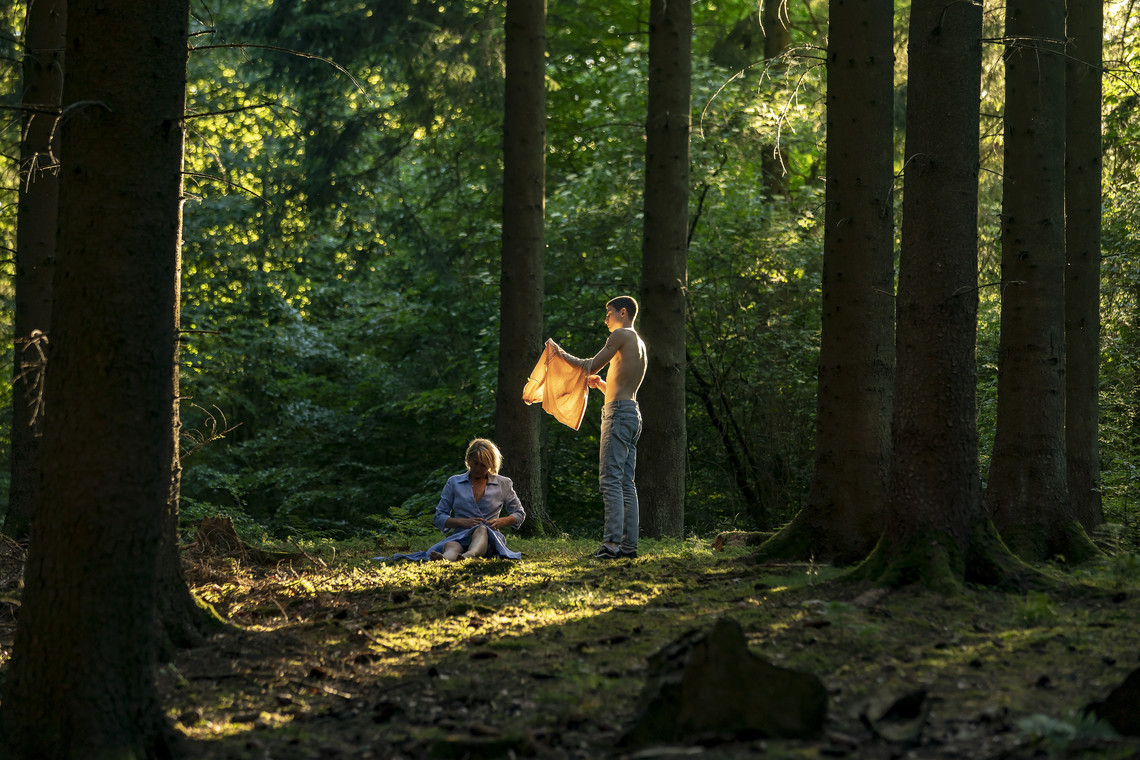
In Wildfire, Lauren (Nora-Jane Noone) is thrown into a stage of manic melancholia when her estranged sister, Kelly (Nika McGuigan), returns. Unannounced and, by the fractious Irish border folk, unwanted, Kelly is, apparently, the very image of her mentally ill mother. Erratic and unpredictable, her physical efforts act as petty metaphors for her misguided amends; in the middle of the night, Kelly takes to her sister’s lawn with a shovel, as ready to drudge up The Troubles as she is to turn the earth in her sister’s garden, toiling that something new might grow.
But Kelly and Lauren’s reunion is shaky, not fertile ground. And their shared trauma at the breakup of their family – their father killed in a bombing in 1992, and later their mother in a tragic car accident – can’t be smoothed over, as Kelly soon learns when told to return the lawn to its former, outwardly calm appearance.
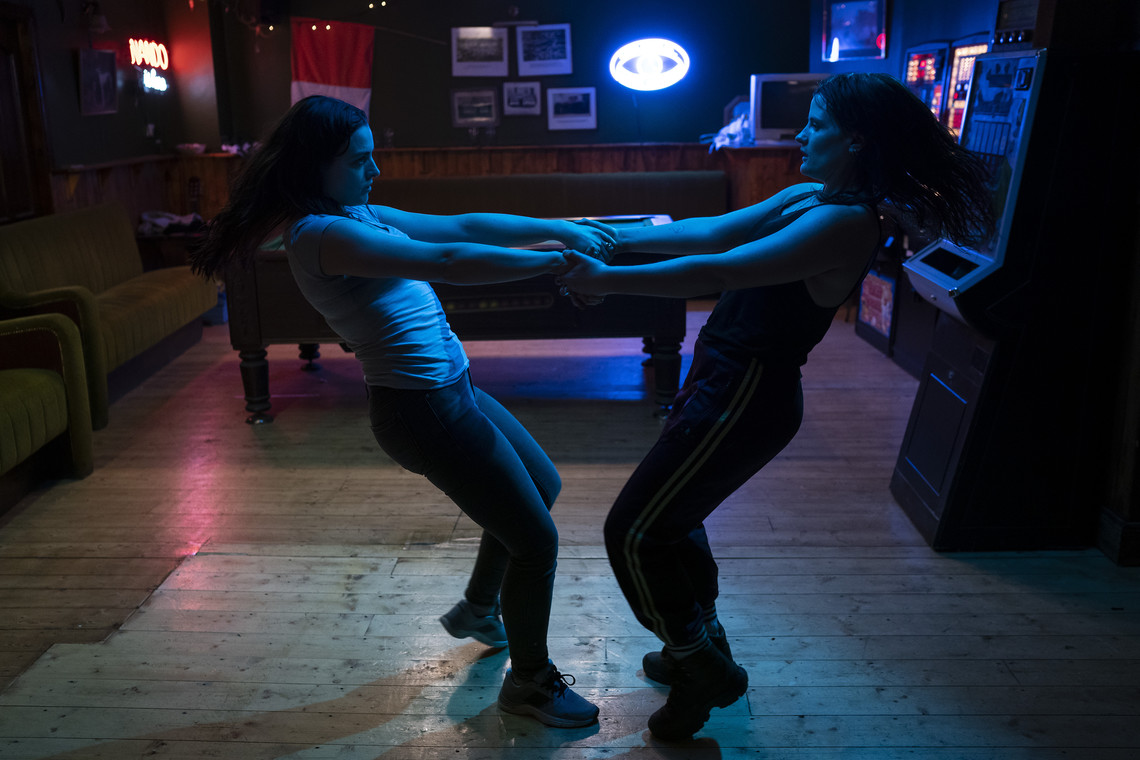
These female protagonists – who so often stand in as allegorical bodies for society, politics, and even countries and continents – in the wake of Brexit, a growing left-right divide, and an online slew of polemics that suggest cancelling everyone who isn’t absolutely, 100% on side, embody and enliven narrative monsters, complicating the mainstream’s hunt for “strong female characters”.
Writer-directors Sacha Polak (and co-writer Susanne Farrell, Dirty God), May el-Toukhy (and co-writer Maren Louise Käehne, Queen of Hearts), and Cathy Brady (Wildfire), have shown monstrous women anew: as complex, and even caring, individuals, whose victimhood has let loose their own attack.
I can’t remember when I first found out about monsters – they are everywhere in children’s stories, but they are born of adult imagination. We need something to call that thing we are so afraid of. In European societies, we make monsters out of people who break rules, and taboos, and of those who can’t put together the broken parts of themselves. We see them as something to kill, conquer, and overcome, so that we might know peace and quiet. But what if we all have monsters inside, lying quietly in wait for something – a border, or a boundary – to break?
This blog was written by:
Supported by Film Hub Scotland, part of the BFI’s Film Audience Network, and funded by Screen Scotland and Lottery funding from the BFI.